
A Bathroom Remodel Isn’t One Decision: It’s Hundreds of Small Decisions Working Together
Most people think a bathroom remodel starts with choosing tile, a vanity, or plumbing fixtures.
In reality, a well-designed bathroom is the result of hundreds of layered decisions happening behind the scenes—many of which homeowners never even realize are being made.
A full bathroom remodel can easily involve 200 to 300 individual decisions.
Because good design is rarely about one dramatic moment.
It’s about how every small detail works together.
Bathroom Remodel Planning Is More Technical Than Most People Realize
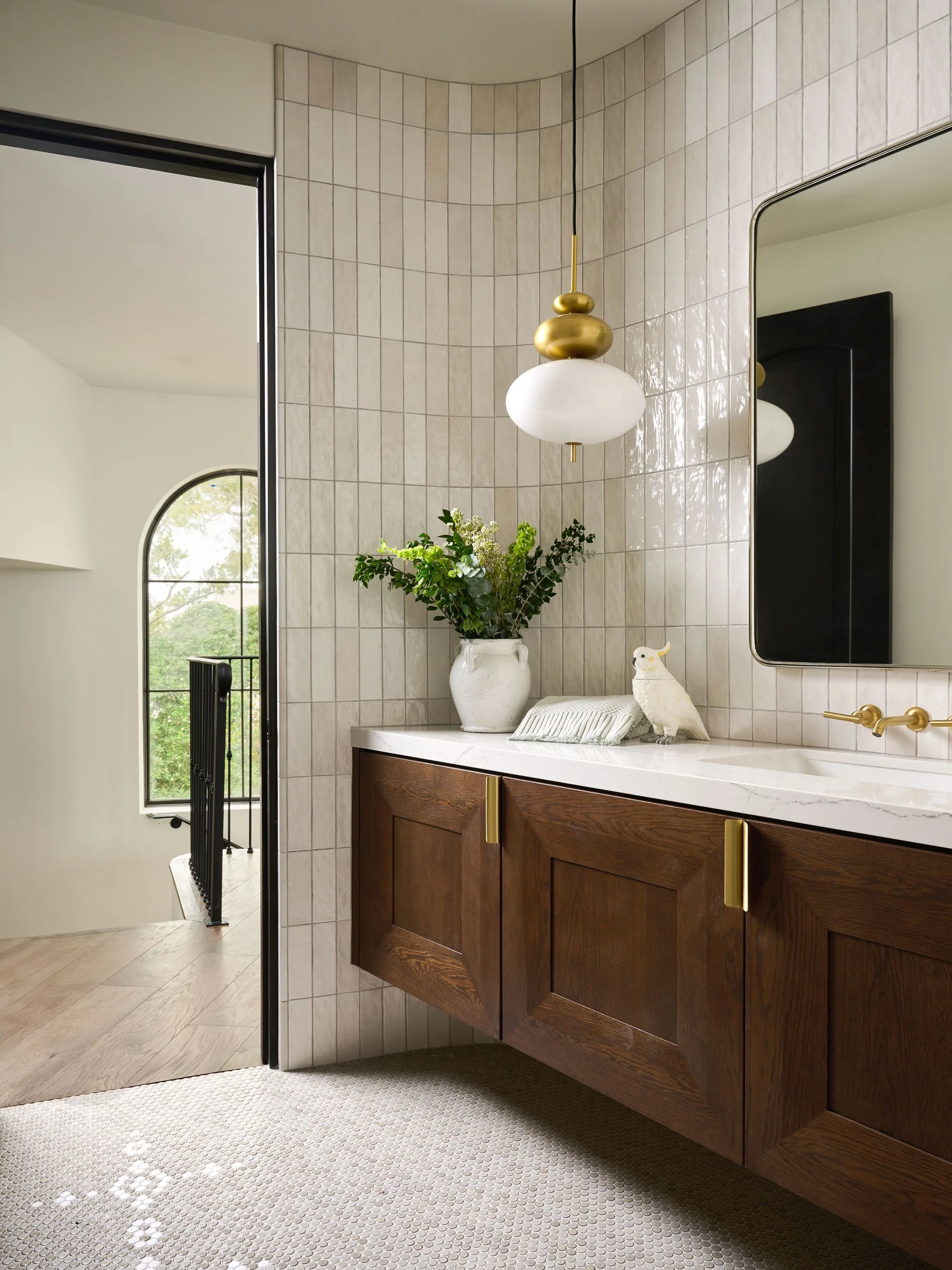
When clients begin planning a remodel, they’re usually focused on the visible elements:
Tile
Cabinetry
Plumbing fixtures
Lighting
Paint colors
Hardware
But the real work begins long before final selections are installed.
A successful bathroom remodel also involves:
Space planning and layout
Plumbing locations
Electrical planning
Ventilation
Waterproofing systems
Storage functionality
Lighting layers
Mirror proportions
Door swings and clearances
Drain placement
Material transitions
Daily comfort and usability
And here’s the part most people do not realize:
Every single decision affects another.
How Tile Selection Affects Shower Drain Placement
Most homeowners choose tile based on color, texture, or pattern.
But tile selection can directly impact how a shower floor is designed and constructed.
For example, large-format tile often pairs better with a linear drain because the floor can slope in a single direction. Trying to use large tile with a traditional center drain can create awkward cuts, uneven planes, and visual disruption.
On the other hand, smaller mosaic tile works more naturally with a center drain because it can contour to multiple slopes more easily.
Even the exact drain location matters.
If a drain is slightly off-center, tile patterns may shift visually, creating uneven cuts that subtly make the entire shower feel unresolved.
Directional tile patterns can also require drain placement adjustments to maintain symmetry and visual flow.
What looks like “just tile” on Pinterest is actually a series of highly coordinated technical decisions.
How Countertop Details Affect Faucet Placement
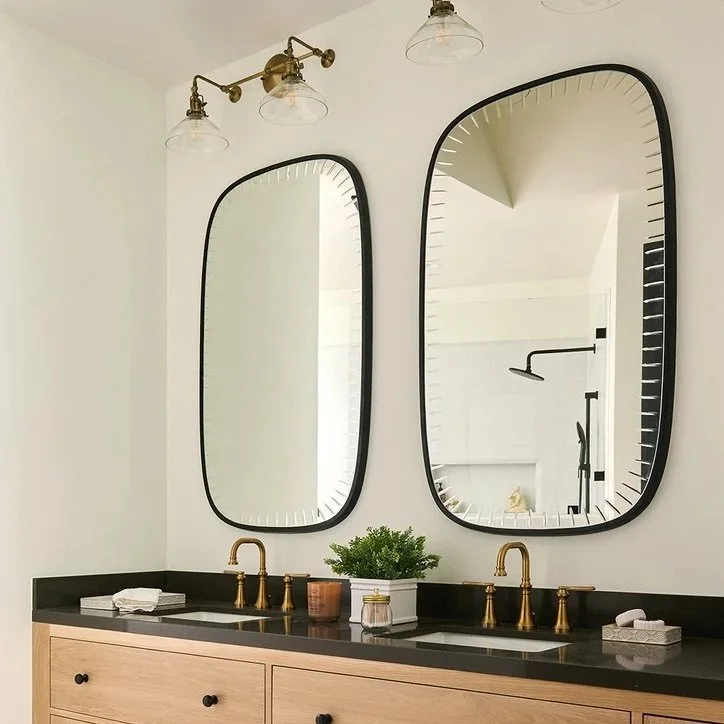
Countertops and plumbing fixtures are another example of how layered bathroom design really is.
A faucet cannot simply be centered over a sink and called done.
Its reach must align properly with the sink basin itself. If the spout extends too far forward, water may splash constantly onto the counter. If it falls too short, usability suffers.
Countertop thickness and backsplash details also affect installation dimensions.
For example, full-height stone splashes or thicker countertop profiles can impact wall-mounted faucet rough-in locations behind the wall.
Even vanity depth changes functionality.
A shallow vanity paired with a large faucet can create awkward splash zones, while deeper counters may require adjustments to mirror height, sconce placement, and overall proportions so the room still feels balanced.
None of these decisions happen independently.
Why the Best Bathrooms Feel Calm
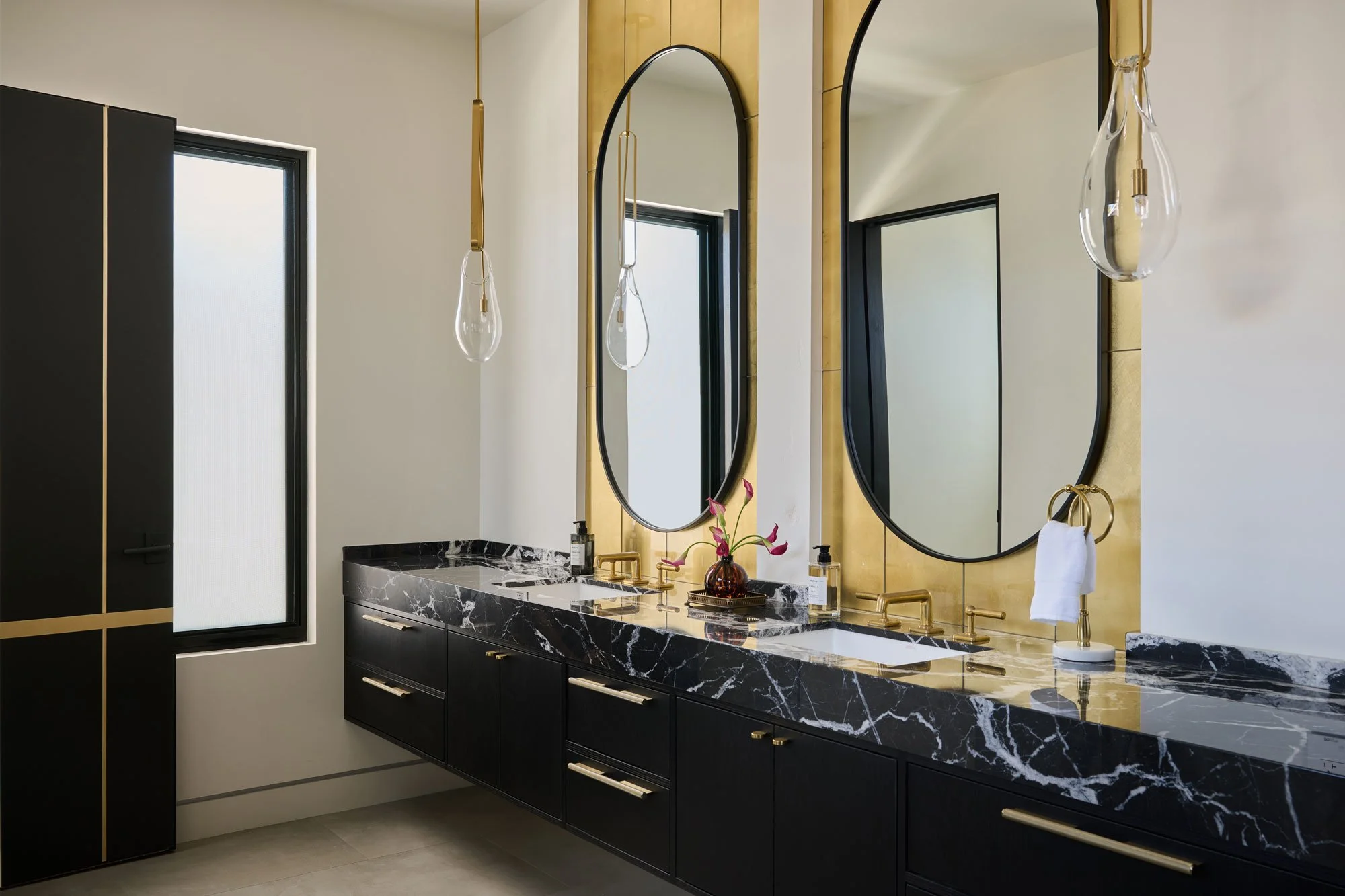
Bathrooms are one of the smallest rooms in a home, yet they require some of the highest levels of coordination.
That is why bathrooms that feel calm, timeless, and effortless are almost never accidental.
The proportions feel balanced.
The lighting feels flattering.
Storage feels intuitive.
The materials flow naturally.
Nothing feels visually “off,” even if you cannot immediately explain why.
That sense of calm comes from thoughtful planning and layered decision-making long before construction begins.
Design-Led Remodeling Changes Everything
At Savvy Interiors, we believe the best remodels happen when design drives the construction process from the beginning.
Before materials are selected, we spend significant time resolving layout, function, proportions, and how our clients actually live day to day.
Because once the foundational decisions are solved correctly, the visual selections become far more cohesive and intentional.
Beautiful bathrooms are not created by pulling random inspiration images together during construction.
They are created through careful coordination, technical understanding, and holistic design thinking.
The Best Bathrooms Are Resolved Before They’re Built
A bathroom remodel is not one decision.
It is hundreds of decisions quietly supporting one another.
And the difference between a bathroom that simply looks beautiful and one that truly feels beautiful usually comes down to how thoughtfully those details were resolved.
The best bathrooms are not rushed.
They are resolved.
If you’re planning a bathroom remodel and want a process that considers the technical details and the design as one integrated whole, we invite you to learn more about our services and how we work.
Learn more about our services and schedule a consultation to talk through your project goals and next steps.
Frequently Asked Questions
How many decisions are involved in a bathroom remodel?
A full bathroom remodel can easily involve 200 to 300 individual decisions, from layout and plumbing locations to drain placement, lighting layers, and material transitions.
Why are bathroom remodels more technical than people expect?
Because bathrooms require careful coordination in a small space—waterproofing, ventilation, electrical planning, clearances, and usability all affect one another.
Does tile selection affect shower drain placement?
Yes. Large-format tile often pairs better with a linear drain, while smaller mosaics can contour more easily to the slopes used with center drains. Even small drain placement shifts can affect how tile patterns land visually.